United’s Scott Kirby Urges Air Traffic Control Technology Upgrades After US Ground Stop
| Shelf | Airlines & Routes |
|---|---|
| Date in | |
| Readers | 657 |
A four-hour ground stop triggered widespread cancellations. United’s CEO says the disruption shows why air traffic control systems need greater reliability.
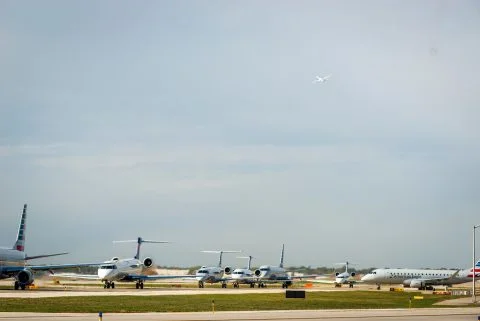
United Airlines chief executive Scott Kirby says the US air traffic control disruption that halted flights nationwide on 13 November should prompt faster investment in technology and system reliability. The ground stop lasted four hours, but its effects continued across the weekend: airlines cancelled more than 15,000 flights, and recovery varied considerably by carrier.
Kirby described the disruption as a “call to action” in a statement dated 15 November. He praised the Federal Aviation Administration (FAA) for acting to keep the airspace safe while controllers worked to land aircraft after communications and radar feeds failed. He said better technology and redundancy are needed now, and pointed to the FAA workforce’s role in maintaining safe operations.
For airlines, the episode showed how quickly a technical failure can become a network-wide scheduling problem. When control facilities lose communications or radar feeds, aircraft movements may need to be restricted while services are restored. Even after a ground stop ends, aircraft and crews can be out of position, leaving carriers to rebuild schedules over multiple days.
Failures spread across control facilities
The FAA traced the cascading problems to a radar site near Amarillo, Texas, and a radio site in Arkansas where supplier L3Harris was carrying out work. The resulting instability affected 17 of the country’s 22 air route traffic control centres, along with terminal radar approach control facilities. The FAA imposed the nationwide ground stop on 13 November as the disruptions unfolded.
L3Harris said it had completed more than 70% of the work to replace copper wiring with fibre optics. The company said on 14 November that it was supporting the FAA’s investigation into the conditions that led to the ground stop. The reported progress figure describes the broader upgrade work; the available details do not specify how much of the work at either affected site had been completed.
The FAA said safety was not compromised and reported no indications of a cyberattack. The agency lifted the ground stop later on 13 November, after four hours. The precise sequence behind the failures, and how the problems spread between facilities, remained under investigation.
Weekend cancellations delayed recovery
The ground stop ended on Friday, but airline operations did not return to normal at once. Cirium data show that US airlines cancelled about 35% of flights on Friday and nearly 30% on Saturday, with more than 15,000 flights cancelled across the two days. By 16:00 US Eastern time on 15 November, 7% of scheduled flights had not been completed. Cirium puts a typical cancellation rate at roughly 3%.
The falling rate pointed to a recovery, though delays were still expected to continue into Monday. Those remaining disruptions reflected the difficulty of restoring aircraft rotations and crew schedules after widespread cancellations. A plane that misses one leg can be unavailable for its next departure, while crew members may no longer be in the locations needed to operate later flights. Airlines also had to manage passenger rebookings as they worked to resume normal schedules.
JetBlue and American among the hardest hit
Cirium’s figures for 13 to 16 November show that the impact differed sharply by airline. JetBlue Airways cancelled 33% of its flights during the period, the highest share cited in the data. American Airlines cancelled 23%. Both carriers, along with much of the industry, offered fee waivers for reservation changes.
American said late on 15 November that aircraft and crews were in position and favourable weather was expected across its network. The airline said it anticipated a good start to the week and did not expect further broad cancellations linked to the disruption. Its outlook indicated that the carrier expected to move beyond the widespread cancellations, although delays could still affect individual flights as schedules settled.
The unequal cancellation rates underline that a shared network disruption can produce very different recovery paths. Each airline’s position depends on where aircraft and crews are when restrictions take effect, as well as how quickly it can reorganize its schedule. The next practical measure will be whether cancellation rates continue to approach the roughly 3% level Cirium describes as typical, while investigators work to establish how the failures at the two sites affected so many control facilities.


