Light aircraft pilot training needs to improve awareness of falling behind power curve: BEA
| Shelf | Business & General Aviation |
|---|---|
| Date in | |
| Readers | 596 |
French investigation authority highlights multiple accidents involving inadvertent prolonged flight at high angle-of-attack. French investigators believe better training is needed for pilots of light ...
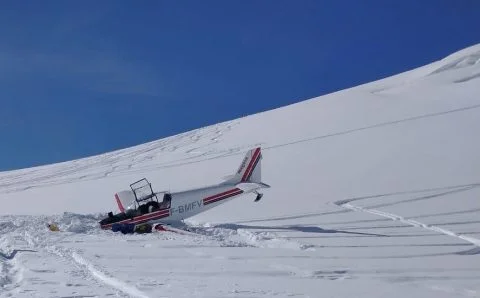
French investigation authority highlights multiple accidents involving inadvertent prolonged flight at high angle-of-attack.
French investigators believe better training is needed for pilots of light aircraft to understand the threat of prolonged flight behind the power curve.
This situation occurs when the aircraft is flying at low speed, requiring a high angle-of-attack to maintain height, but without the reserve power needed to accelerate or climb.
French investigation authority BEA, in a newly-published analysis, says recent inquiries have often shown that pilots were “unknowingly operating” in this condition – known in French as the ‘second regime’.
Testimony from surviving pilots indicates that, owing to “insufficient knowledge”, they were unaware that the aircraft was flying at a high angle-of-attack, and did not attempt recovery manoeuvres.
Difficulties encountered were often interpreted instead as a lack of engine power and inability to climb.
The ‘second regime’ condition primarily emerges during mountain flying or normally-transient low-speed phases of flight – such as take-off or an aborted landing.
Over the course of 2019 to 2025, BEA recorded 20 accidents – a dozen of them fatal – occurring in these circumstances. While they represented 4% of light aircraft accidents during this period, they accounted for 15% of fatal occurrences and over 20% of the casualties.
BEA says the scenarios of mountain accidents are “similar”. Pilots approach terrain with a climb gradient similar to the valley slope, but this slope increases steeply as the aircraft nears the summit, pass or ridge.
The absence of a natural horizon limits visual references for estimating pitch attitude, and the pilot will tend “unconsciously” to increase pitch attitude, says BEA, increasing angle-of-attack and drag, entering the ‘second regime’ – close to stall, at low height, with limited energy reserve.
Pilots often position the aircraft naturally in the centre of valleys, depriving themselves of the possibility to turn back.
BEA says take-off or aborted landings can also lead to prolonged ‘second regime’ flight, as ground effect disappears and high angle-of-attack generates drag – notably if the pitch at rotation is too excessive for the conditions.
It says pilot training mostly demonstrates the effect of slow flight while the aircraft is level, at a height that ensures safety. But the analysis shows that the gradual transition to the ‘second regime’ can occur during a climb, and can be prolonged during take-off despite indications of maximum power.
“Exercises offered during basic pilot training…do not fully cover these situations,” BEA adds.
It suggests that pilots’ awareness should be improved with the illustration of the typical scenarios outlined, and development of materials to show how gradual transition to the ‘second regime’ can occur during climb.
The post Light aircraft pilot training needs to improve awareness of falling behind power curve: BEA first appeared on FlightGlobal.