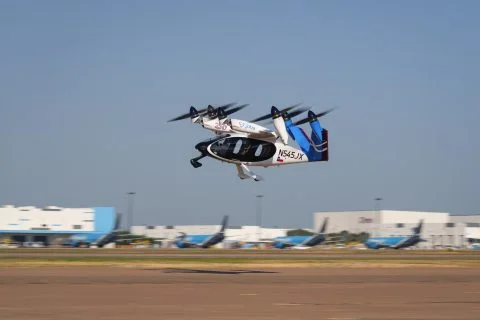
Florida Polytechnic University to Evaluate Jetson ONE Electric Aircraft for Campus Operations
| Shelf | Aircraft & Manufacturing |
|---|---|
| Date in | |
| Readers | 827 |
Florida Polytechnic’s police department will assess the Jetson ONE, Astro, for campus monitoring, emergency supply delivery and aerospace research.

Florida Polytechnic University’s Jetson ONE evaluation will put a compact, single-seat electric aircraft into a campus policing and research setting. The university’s police department plans to examine potential roles including campus monitoring, reaching places with limited road access and delivering emergency supplies. The aircraft, named “Astro” and registered as N911FP, was delivered earlier this summer, Jetson Inc. said on 20 October.
The project gives the university a chance to study how a personal eVTOL might fit into practical operations. Jetson describes the aircraft as the first electric flying patrol vehicle intended for policing. That description sets out the company’s positioning; the announcement leaves open what missions the university will actually conduct and how often it might fly.
Training and planned uses
Police chief Aaron Murray and several other officers have completed pilot training. Florida Polytechnic has also obtained Federal Aviation Administration Part 91 approval for its intended operations. Those steps provide a basis for evaluation, though the available details do not specify operating limits, flight procedures, or which tasks will be tested first.
The department has identified several possible uses. Monitoring the campus from the air could offer another way to observe areas across university grounds. Accessing locations that are difficult to reach by road may also be useful in particular situations. For emergency supply delivery, the aircraft could be assessed for carrying items to a destination quickly. The source provides no details on payload, range, flight duration or the supplies under consideration, so the practical scope of these missions remains to be established.
The university also intends to work with regional policing agencies to examine possible emergency-response applications. That work could help determine where a small, single-seat aircraft fits into existing response arrangements and where it does not. The source does not describe a deployment schedule or specific response scenarios. For now, these are areas for investigation rather than confirmed routine services.
A flying platform for students
Astro is also intended to support teaching and research. Florida Polytechnic introduced an aerospace engineering degree programme in autumn 2026, creating an opportunity for students and faculty to study emerging aviation technology using an aircraft in an operational setting. The university has not described the research projects planned for Astro, but the aircraft could give students a practical platform for examining how an eVTOL is operated and assessed.
Jetson said its platform was validated in May 2025 and that the university’s aircraft has been fitted with police lighting. Those details describe the aircraft’s development and configuration, but they do not answer questions about its operating envelope or day-to-day use. The announcement does not say how the lighting will be used, whether additional equipment is fitted, or what procedures will govern flights.
That distinction matters for a trial involving a personal aircraft in a public-sector role. Potential value depends on more than the ability to fly: the university will need to assess which tasks suit the aircraft, how crews prepare for them and how the aircraft fits alongside other ways of reaching or observing a location. The source does not report results from such evaluations, so the project’s operational value has yet to be demonstrated.
Florida’s advanced air mobility activity
The evaluation sits within a broader effort to explore advanced air mobility in Florida. The state has been selected for the FAA’s eVTOL and Advanced Air Mobility Integration Pilot Program, and the SunTrax facility in Auburndale includes infrastructure dedicated to advanced air mobility testing. The university project adds an operational setting to that activity, while its stated plans span both policing applications and aerospace education.
For other operators, the useful takeaway will be the evidence the university gathers about a small eVTOL’s fit for defined tasks. Campus monitoring, access to road-limited locations and supply delivery each raise different operational questions. The source does not provide answers yet, and it gives no aircraft performance figures that would support a broader assessment. What comes next is the university’s evaluation: which uses it pursues, what it learns in practice and whether regional agencies identify roles worth exploring further.
Jetson Inc.’s announcement is the source of the aircraft description and delivery timing. Further details on missions, operating limits and integration into routine procedures have not been provided in the material available. The original report appeared at eVTOL Insights.