ICAO Proposes New Guidance and a Contact Platform for Air Rules
| Shelf | Airlines & Routes |
|---|---|
| Date in | |
| Readers | 522 |
ICAO’s proposals would help countries share reports of air rule violations and apply Article 12 through different enforcement methods.


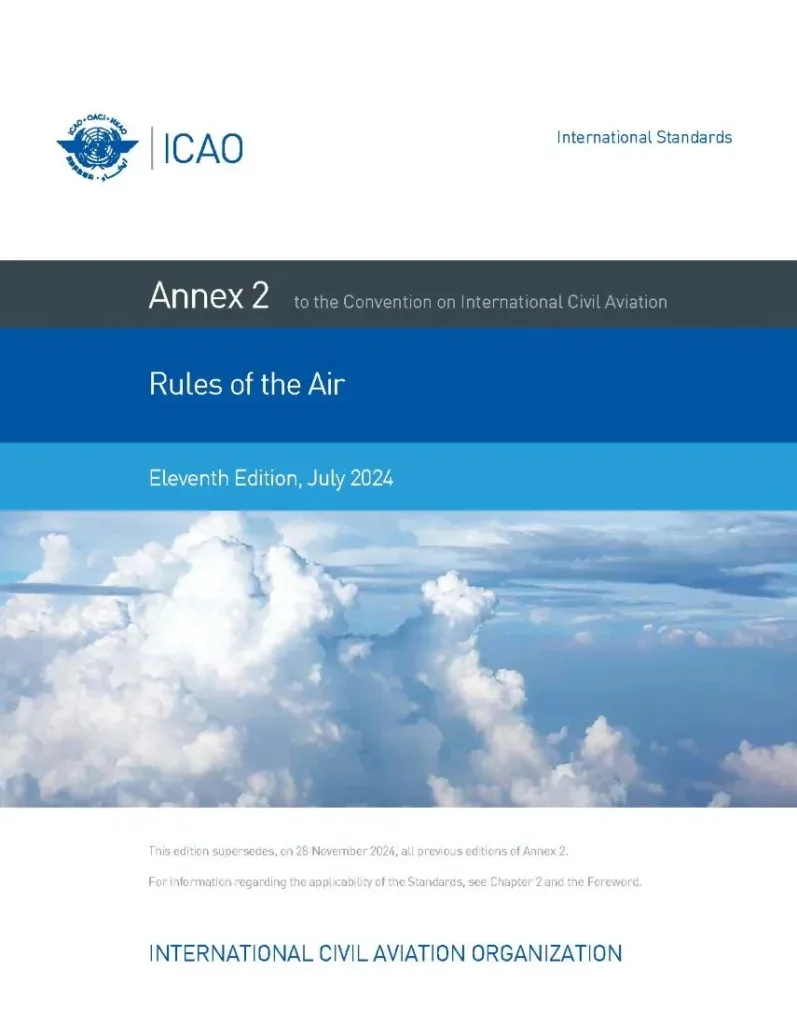
Countries can use different methods to enforce international air rules, but gaps in how they report violations involving foreign aircraft make it harder to coordinate a response. The International Civil Aviation Organization’s Legal Committee has proposed guidance on applying Article 12 of the Convention on International Civil Aviation, alongside a platform for sharing notifications between countries. The proposals are scheduled for consideration at the Committee’s 40th Session, set for 26–30 October 2026 at ICAO Headquarters.
Article 12 covers the Rules of the Air, which apply to international flights from takeoff through landing. It calls on each country to enforce those rules for aircraft operating in its territory and for its own aircraft wherever they fly. It also asks countries to align their national rules as closely as possible with ICAO standards and to prosecute violations.
The practical challenge is that the same obligation can lead to different responses in different places. Depending on the country, a violation may result in criminal prosecution, a fine or a requirement for retraining. That range can leave pilots and operators uncertain about what consequences may follow an incident, while making it harder to judge whether countries are meeting Article 12’s requirements consistently.
Information gaps complicate coordination
A legal survey found that 75% of responding countries lack systems for sharing information about violations involving foreign aircraft. Notifications may be delayed or lost, including in cases involving flights over the high seas, where it can be unclear which country has jurisdiction. Without timely information and a clear contact point, the country that learns of a possible violation may struggle to alert the country responsible for follow-up.
The missing links affect more than the speed of a notification. If the relevant authorities cannot identify one another or pass on the details of an event, it becomes harder to determine what response is appropriate and whether another country has acted. Privacy concerns and potential legal risks can also make organizations cautious about sharing data. That caution can limit the exchange of information that supports safety reporting and oversight.
These difficulties show why a shared process matters alongside national rules. Countries may retain different enforcement systems, but they need a workable way to notify one another when an event crosses borders. A defined channel could make it clearer where a notification should go, who is responsible for receiving it and how the exchange can proceed. The proposed platform is intended to serve that purpose by formalizing contact, speeding up information exchanges and identifying reachable responsible officials.
Guidance would allow different enforcement methods
The Committee’s proposed guidance would be the first ICAO document focused on implementing Article 12. Its role would be to help countries understand how to carry out the article’s requirements while accounting for the different systems they already use. The committee has also emphasized that compliance need not mean applying one identical penalty everywhere.
Countries could meet their commitments through administrative penalties, civil actions or educational measures, as well as criminal prosecution. That flexibility recognizes that a fine, a court case and retraining are different tools. The common measure, in the Committee’s approach, is whether the response supports effective safety outcomes and whether the country is meeting its obligations.
For pilots and operators, clearer guidance could make the range of possible responses easier to understand, even if national procedures continue to differ. For authorities, a common reference and a dependable way to exchange notifications could help close the gap between learning about a violation and deciding how to handle it. Those benefits depend on countries putting the proposed arrangements into practice and keeping contact information and procedures usable.
Next step is Council review
The Committee has also pointed to existing regional arrangements as examples of how countries can cooperate and provide mutual assistance. Such arrangements offer a basis for considering how information exchange and practical support might work across a wider group of countries. The source does not specify which arrangements would be used or how any broader system would operate.
The proposals now go to the ICAO Council for review. The next milestone is whether the Council advances the guidance and communication platform, and how the final approach addresses notification, cooperation and the flexibility countries have in enforcing air rules. For operators flying across borders, the central change to watch is whether reports become easier to route and follow up, while countries retain room to choose measures suited to their systems.
The post Global aviation safety concerns motivated this new ICAO legal guidance appeared first on Uniting Aviation.