Learjet 60 Inquiry Examines Turbulence, Icing and High-Altitude Flight
| Shelf | Airports & Air Traffic |
|---|---|
| Date in | |
| Readers | 985 |
The Learjet 60 was climbing through convective weather near Florida when it entered a steep descent; investigators are assessing the upset and recorder status.
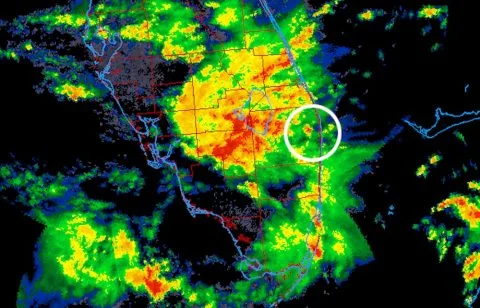
The inquiry into the 1 November loss of a Bombardier Learjet 60 near West Palm Beach will need to establish how the aircraft went from cruise to a steep descent and high-speed dive. Convective weather, reported turbulence and icing were part of the flight’s final exchanges with air traffic control, but investigators have not determined what caused the upset.
The jet was bound for North Eleuthera airport in the Bahamas. It had been heading towards Freeport at 35,000ft when one pilot told Miami’s en route air traffic control centre that the aircraft was experiencing “moderate” turbulence. The pilot described the crew as “managing the ice”.
Eastern Florida had thunderstorms and heavy rain at the time. The pilot reported an outside air temperature of minus 47°C and asked whether smoother air was available. The controller said they could “expect better rides ahead”. The pilot later reported that the aircraft was “picking up precipitation” and requested a climb to 37,000ft. Air traffic control cleared the climb.
Several factors could shape the inquiry
Those radio exchanges establish what the crew reported and what clearance it received; they do not, by themselves, explain the aircraft’s subsequent flight path. Investigators will need to reconstruct how the Learjet responded to the conditions and whether it remained within its operating envelope. The sequence also leaves open whether another factor, including a mechanical or structural failure, initiated the upset.
At high altitude, the margin between aerodynamic limits can narrow. As an aircraft’s Mach number increases, its handling becomes more sensitive to angle of attack. Icing adds another consideration. Convective turbulence can increase the aerodynamic loads on a wing, while the available margin between Mach buffet and stall buffet may already be reduced at cruise altitude.
These effects make the conditions and the aircraft’s recorded movements important to the inquiry. A report of turbulence, precipitation or ice does not establish that any one of them caused the dive. Investigators will need evidence showing the aircraft’s speed, pitch, bank, altitude and control inputs, if that information was recorded and can be recovered.
Flight envelope and the Learjet 60
A supercritical wing is shaped to improve efficiency at high speed. But if the aircraft passes critical Mach thresholds, airflow changes can shift the wing’s centre of pressure aft and create a nose-down tendency known as Mach tuck. An overspeed may also be difficult to counter. The Learjet 60 has a Mach trim system designed to stabilise pitch at critical speeds.
The general relationship between altitude and buffet margins is relevant, too: at a constant level of turbulence, a lower altitude offers greater margins. That does not show whether a different altitude would have prevented this accident. The crew had reported precipitation and requested a climb, and the inquiry will have to assess the flight’s conditions alongside the aircraft’s recorded performance and any physical evidence.
The reported high-speed dive and banking right turn describe the aircraft’s final known manoeuvre, but they do not identify its cause. Investigators will need to distinguish an excursion beyond the flight envelope from an upset triggered by another event. The available source information does not establish which explanation, if any, is supported.
Recorder status remains unknown
The Learjet had nine occupants. Investigators have not yet determined whether it carried a cockpit voice recorder or flight data recorder. The aircraft’s operating status has also not been confirmed. Part 135 rules state that aircraft with six or more passenger seats need a cockpit recorder.
Recorder information, if available, could help establish what the crew said and how the aircraft’s systems and flight path changed. The inquiry’s next findings will matter for understanding the timing of the upset, the role of the reported weather and whether the aircraft’s systems were operating as intended. Until that evidence is available, the cause remains undetermined.
Read the initial report on the Learjet 60 accident near West Palm Beach.
Further reporting on the inquiry first appeared on FlightGlobal.


