Southwest 737 Max Flew 44 Times Before Gust Damage to Rudder System Was Found
| Shelf | Airlines & Routes |
|---|---|
| Date in | |
| Readers | 881 |
A missed maintenance check left wind damage to a Southwest 737 Max’s fin and rudder unit undetected until pilots reported an in-flight oscillation.
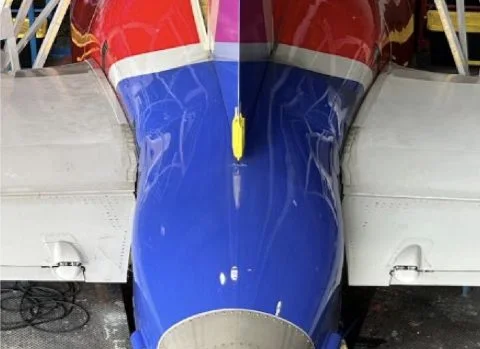
Damage to a Southwest Airlines Boeing 737 Max went undetected through 44 flights after a maintenance test failed to confirm that the rudder moved correctly. The aircraft had been exposed to strong gusts while parked in New Orleans, and the damage was later linked to a slight Dutch roll and movement of the rudder pedals reported by pilots.
The National Transportation Safety Board’s final report says the maintenance team did not follow the required procedure during an operational test of the standby hydraulic system. The test called for someone to visually check the rudder’s position. That check could have shown that the rudder would not return to neutral, a sign of the impairment.
Video of the test showed the rudder moving right but not left. No one was positioned at the rear of the aircraft to observe its travel. Southwest personnel signed off that the aircraft had passed, despite not visually confirming the rudder position. Investigators could not determine whether the existing damage to a rib in the vertical stabilizer worsened during the test.
Wind damage preceded the test
The aircraft had been parked overnight in New Orleans on 16 May 2024, where it encountered thunderstorms and gusts of up to 73kt. The maintenance test took place about a week later. Two days after the test, on 25 May, pilots on a Phoenix–Oakland service experienced the rudder oscillation that prompted closer attention to the aircraft’s handling.
The report says the gusts moved the rudder far enough to damage ribs in the vertical fin. The 737 rudder system has no gust lock, and the rudder control unit is connected to the affected fin structure. In this case, wind exposure while parked was followed by damage that was not identified during the subsequent maintenance check.
The effects had appeared earlier, on the aircraft’s fourth flight on 24 May. The crew flying to San Jose believed the yaw damper had malfunctioned. They disabled it, and the aircraft completed another flight that day. On the following day’s Phoenix–Oakland service, pilots felt a slight Dutch roll and noticed movement of the rudder pedals. They concluded the oscillation came from the aircraft rather than the weather.
After landing in Oakland, inspections found damage to the vertical fin’s trailing-edge ribs both above and below the standby rudder power-control unit. The aircraft had flown 44 times before the damage was discovered. That flight count shows how a problem can remain difficult to identify when the initial evidence is subtle and the maintenance test does not include the visual check needed to reveal it.
Changes to inspections and reporting
At the time, the aircraft maintenance manual did not specify a high-wind threshold that would trigger a conditional inspection. Southwest also lacked a process to alert maintenance personnel when one of its aircraft might have been exposed to such conditions. That left the wind event and the inspection decision without a defined link in the carrier’s process.
Southwest later inspected the vertical fins across its 737 Max fleet; those checks found no other damage. The airline also revised the standby hydraulic system test procedure and introduced a process for notifying maintenance control when parked aircraft experience an extreme high-wind event. Boeing set a 65kt threshold for triggering a conditional inspection.
The changes address two separate points in the sequence: identifying aircraft that may need inspection after severe wind exposure, and confirming rudder movement during the hydraulic system test. The report does not establish whether the test itself added to the fin damage, but it does document that the required visual confirmation was missed. For operators, the practical takeaway is that a completed test is only as useful as the observations and checks its procedure requires.
The earlier report on the aircraft’s exposure to strong winds provides further background on the New Orleans event. The investigation’s findings now connect that exposure, the missed rudder check and the later crew reports, while leaving the extent of any additional damage during maintenance undetermined.