Singapore Airlines’ New Long-Haul Seats Add Privacy but Raise a Brand Question
| Shelf | Airlines & Routes |
|---|---|
| Date in | |
| Readers | 954 |
Singapore Airlines’ new suites improve comfort and privacy, while its Business Class design leaves its visual identity less settled.
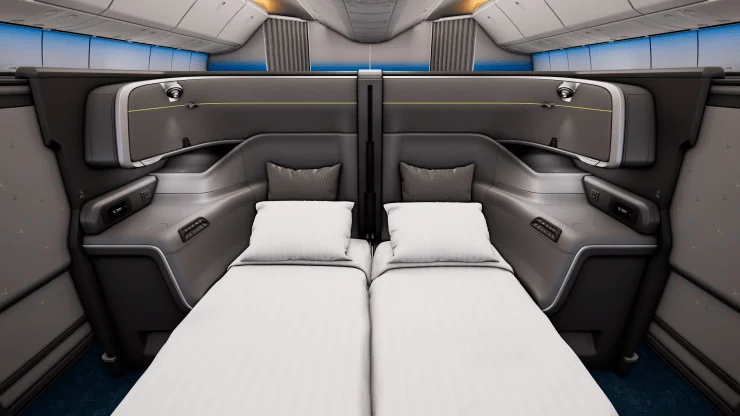
Singapore Airlines’ next long-haul cabins make a clear case for better privacy and easier living in the seat. The bigger design question is whether the Business Class cabin feels as recognisably Singapore Airlines as the First Class suites do. The airline has invested more than S$2 billion in the new generation of cabins, and the distinction between a well-engineered seat and a distinctive airline experience will matter as more carriers adopt private suites.

The Business Class seat, designed by BMW Group’s Designworks and built by Recaro, tackles several practical frustrations in the existing product. Its coordinated recline is meant to follow the body more naturally, and a larger footwell gives passengers more room to stretch. The bed measures 79 inches, compared with 78 inches on the seat introduced in 2013. Preparing it for sleep no longer requires flipping the seat over.

Sliding doors and taller seat walls add privacy. Between the centre seats, adjustable dividers let travelling companions open the space between them; selected pairs can also be set up as companion beds, as in the existing cabin. These features give the seat a broader range of uses for working, dining and sleeping.

That is a strong practical brief, and the design team appears to have addressed it with care. Recaro brings aircraft seating and manufacturing experience; Designworks shaped the product’s form and operation. Yet the design language leans heavily on grey surfaces, tall partitions and yellow accents. It looks assured and capable, but could belong to several airlines pursuing a contemporary premium cabin. The automotive influence is especially prominent, and at times it speaks louder than Singapore Airlines’ own visual cues.

There is also a change in the amount of space passengers get. The current long-haul Business Class seat has a published width of 28 inches. The new seat is listed at 22 inches on the A350 and 24 inches on the 777-9, while its lie-flat bed can be up to 24 inches wide. The measurements may not compare directly because the seat shapes and mechanisms differ. Still, they suggest a shift away from expansive width and towards enclosure, privacy and a more structured personal space.
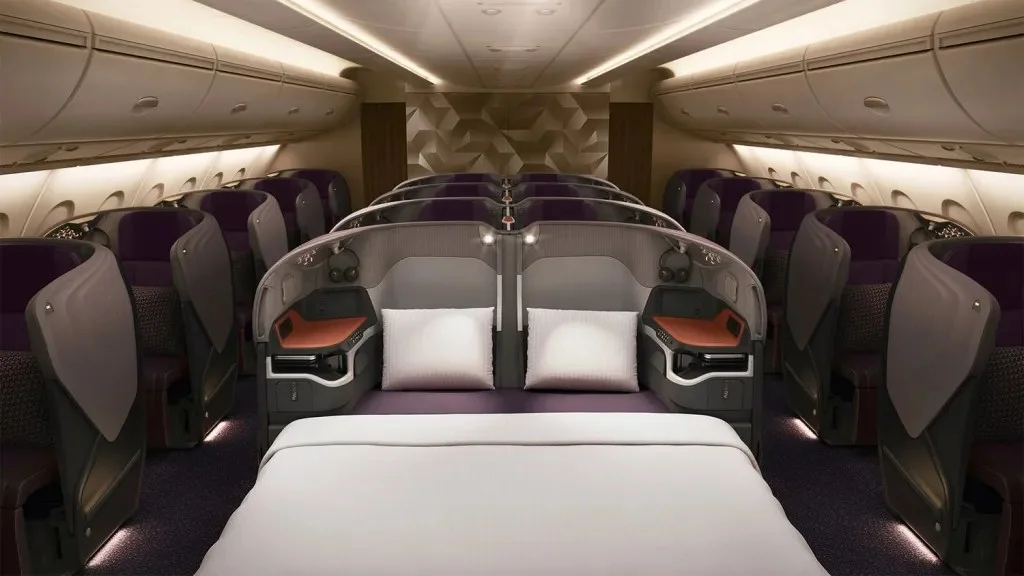
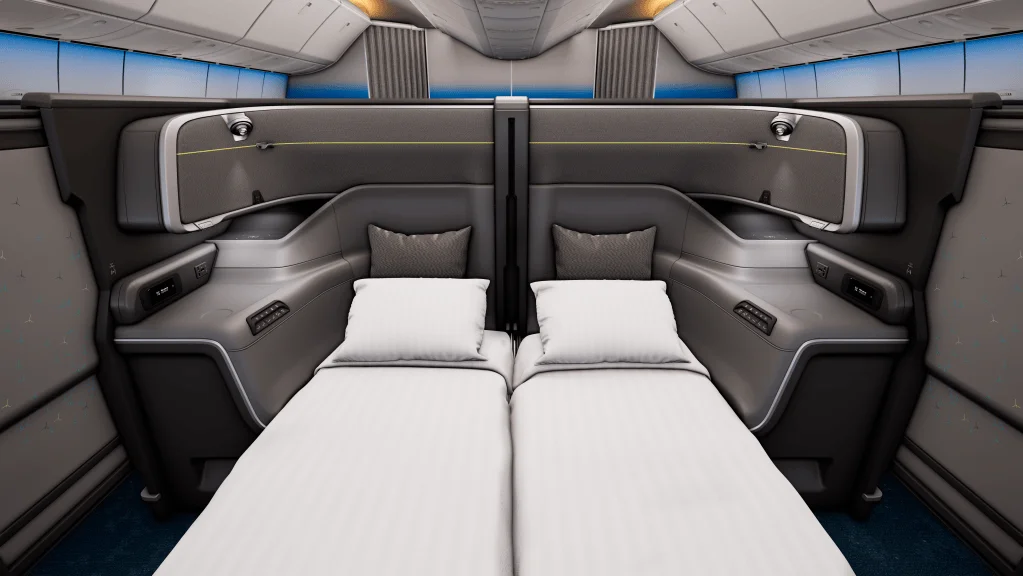
First Class offers a more resolved expression of the airline’s identity. Curved doors and an enclosed suite create a sense of occasion, while louvred details and batik-patterned fabric walls bring the cabin into conversation with Singapore Airlines’ visual heritage. The 777-9 will have six suites and the A350-900ULR four. At the centre, two suites can form a shared sofa or, with the divider retracted, an 80-inch double bed five feet across.
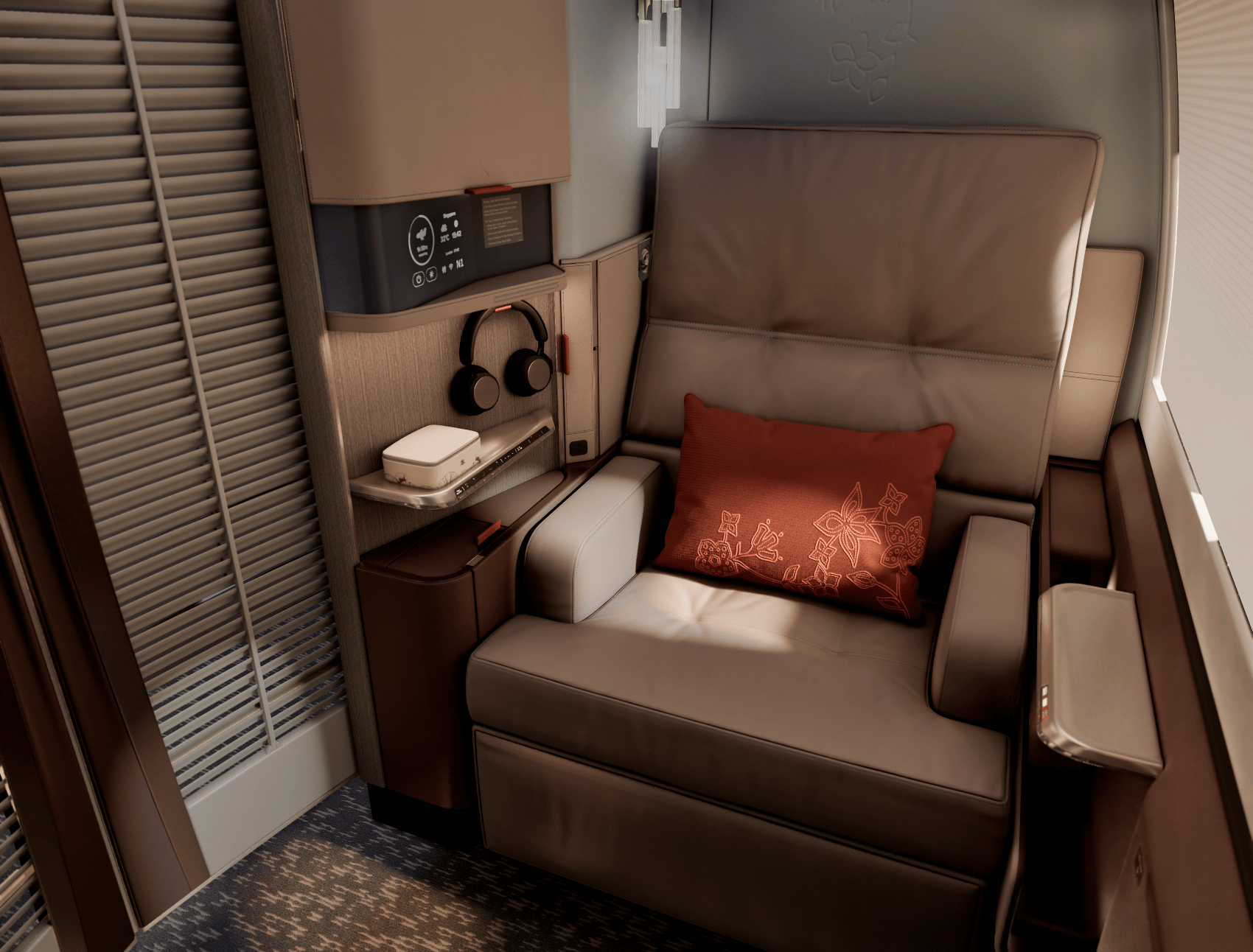

Those heritage details work as part of the suite’s texture and atmosphere, rather than as decoration applied at the end. The contrast with Business Class is noticeable: one cabin combines modern privacy with a clear point of view, while the other relies more on contemporary materials and technology. A coherent look is useful, but it does not by itself make a cabin distinctive.
That distinction matters because doors and private suites have become familiar features in premium cabins. ANA introduced its door-equipped THE Room in 2019, developed with architect Kengo Kuma and British design studio Acumen. ANA linked the design to multifunctional Japanese living spaces, with wood finishes and a broad, sofa-like seat. Japan Airlines’ A350-1000, unveiled in 2023, gives every Business Class passenger a private suite and frames its cabin around Japanese aesthetics and tranquillity.

Singapore Airlines has plenty of material for a more individual design language: batik, the Singapore Girl’s sarong kebaya, and the midnight blue and gold of its livery. These are durable brand assets in a market where cabin colours and finishes can easily converge. The challenge is to let them influence choices of pattern, colour, material and light from the start, without turning the cabin into a heritage display.

The airline’s refreshed SilverKris lounges offer a useful point of comparison. The 2022 flagship redesign at Changi was a S$50 million project spanning 6,100 square metres and designed for around 1,150 guests. Its mix of warm seating, art, crafted lighting and batik references feels connected to the new First Class suites. Business Class, with its cooler and harder finishes, seems to speak in a different design voice.

Singapore’s identity can offer more than familiar images of towers and illuminated skylines. Tropical greenery, shophouses, neighbourhood life, food and craft can inform a cabin without being reproduced literally. The airline says research with more than 5,000 travellers, employees and industry experts shaped the new products, with privacy, comfort, flexibility and intuitive features among the priorities. The seats respond directly to those needs. The next step is to make those practical gains carry a recognisable sense of place.

Singapore Airlines’ batik motif and crew uniform have lasted because they connect service with a place and a particular idea of welcome. The new Business Class seat seems to solve many of the functional issues it set out to address; what remains less clear is what the airline wants contemporary luxury to feel like. First Class provides one answer. Business Class still has room to bring its engineering, privacy and visual identity into the same conversation.
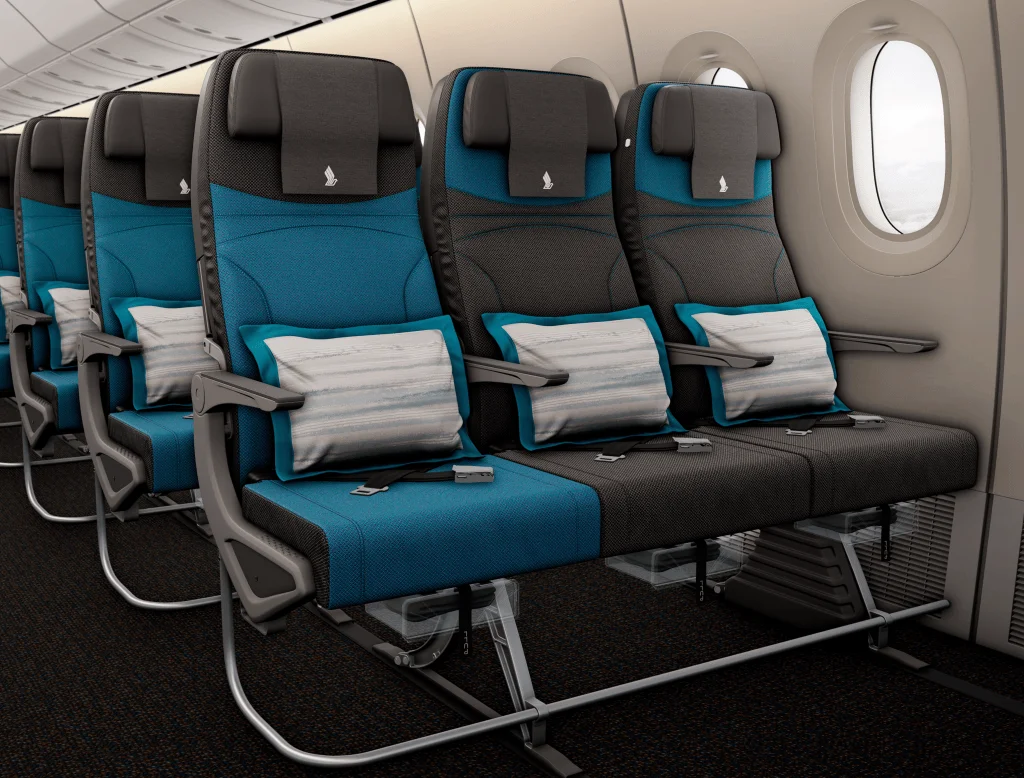
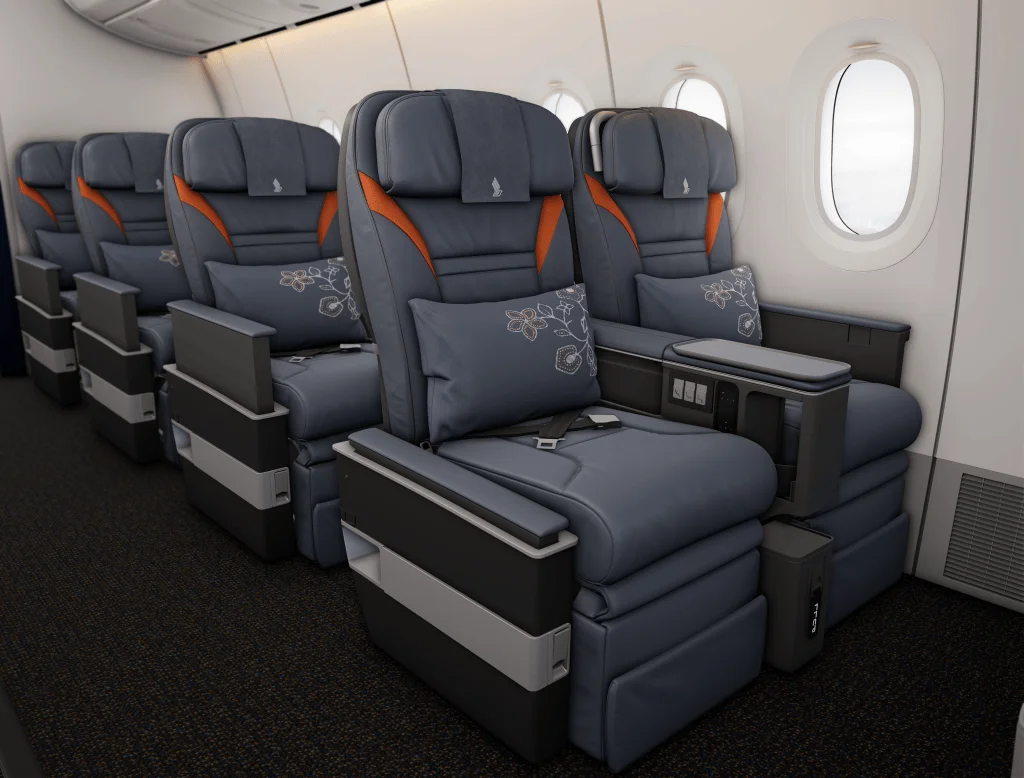


The new cabins are quieter, more private and more capable, but those qualities are increasingly shared across the premium market. Singapore Airlines’ opportunity is to make the details tell a story that belongs to the airline as clearly as the doors and beds serve the passenger.
As I do every year, I ask on your kind support to keep things going. If you are able to donate – whatever amount – it all gets funnelled back in to the site, to keep the site full of content. And I thank you personally for your kind support.


