Airbus Rewrites A321 Stabiliser Jam Procedure After Mis-Trim Case
| Shelf | Aircraft & Manufacturing |
|---|---|
| Date in | |
| Readers | 953 |
Airbus has added a detailed stabiliser jam procedure to A321 crew training after an Air France jet was mis-trimmed during an alternate law descent to Paris.
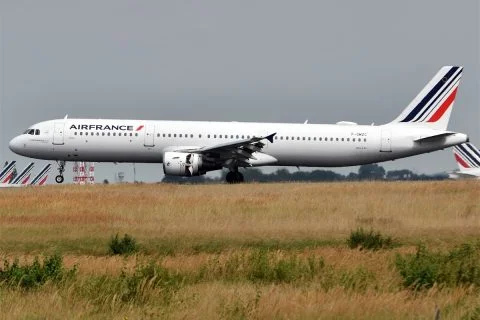
An Air France A321 landed at Paris Charles de Gaulle with its stabiliser close to the nose-down stop and its elevators close to the nose-up limit. The crew had no idea how far the trim had drifted.
Airbus has now clarified its stabiliser jam procedure following that incident, and the changes matter well beyond one Air France crew. The French investigation authority BEA has done much of the detailed work here, and its findings point to a mix of a mechanical fault, a gap in simulator training and a procedure that was open to misreading. Each of those is something other operators flying the A320 family should be looking at.
What the trim picture looked like
The aircraft was on its descent through 30,000ft when the crew received a jammed-stabiliser alert. The autopilot disengaged and the flight-control system reverted to alternate law. From that point, the sidestick no longer commanded elevator position directly. It commanded load factor, and the computers worked to hold that load factor on the crew's behalf.
That's the detail that makes this case interesting. Over the rest of the descent, the first officer, who was flying, kept trimming. He was aiming to reduce the forces he felt on the sidestick. The stabiliser moved steadily toward the nose-down stop. The flight computers, meanwhile, deflected the elevators upwards to keep the commanded load factor. Nothing in the cockpit showed the crew how far the trim had gone, and BEA notes that this behaviour wasn't perceptible during the descent.
The aircraft didn't switch back to direct law until the landing gear was extended on final approach to Paris. That's late in the profile for a crew to discover that the trim configuration is far from neutral. All 195 occupants of the flight, which had arrived from Malaga on 27 April last year, were uninjured.
A pin on the wrong side
BEA believes a wrongly installed pin on the first officer's side of the manual trim wheel may have temporarily blocked the mechanical control system of the stabiliser. The effect, as BEA describes it, was to stop electrical trim commands from reaching the stabiliser while leaving the manual wheel functional. The crew had a trim control that moved, but one that didn't give them the response they expected from the system.
Investigators are careful to frame this as a belief about a possible mechanism, and that's the right way to read it. What's clear is that the jam procedure depends on the manual wheel behaving predictably, and in this case the wheel was available but the system around it was not in a normal state.
Where the procedure went sideways
The stabiliser jam procedure asks the crew to check that the trim wheel works, then trim the aircraft to neutral elevator. That means using the wheel to keep the elevators at the zero position. The aim is to preserve maximum pitch authority from the elevators, so the aircraft keeps its full range of nose-attitude control.
Here, the captain understood the instruction as setting the stabiliser to zero. The first officer appears to have confused it with a similar instruction that applies under direct law, where trimming to reduce sidestick force is the normal habit. Two readings of a familiar-sounding step, one in each seat, and only one of them matched what the procedure intended.
BEA's view is that the crew believed the instructions were simple and didn't look for further detail. That's a very human outcome. Checklists and memory items are written to be fast, and when a procedure reads as obvious, few crews stop to question it mid-descent. BEA says the "lack of clarity" around the procedure contributed to the incident. It also says the captain, facing a heavy workload at the time, did not monitor the situation sufficiently.
The training gap
BEA's most pointed finding concerns simulator training. Pilot training did not allow crews to practise flying under alternate law with only the manual trim wheel available. The stabiliser jam exercises covered two situations: the loss of both electric and manual trim, or the use of manual trim while in direct law. The exact scenario the crew faced, with alternate law and a manual wheel as the only working trim, sat between those two drills and wasn't rehearsed.
That's a pattern worth watching. Training syllabi tend to cover the failure modes that are easiest to define cleanly. A combination that sits between two well-drilled cases can fall through the gap, especially when the crew's mental model is built from the familiar direct-law habit. Any operator reviewing its own A320 family stabiliser drills should check whether that intermediate configuration is actually flown in the simulator, or only described on paper.
What Airbus has changed
Airbus has revised the crew training manual to add a detailed procedure for stabiliser jam, specifying the expected actions of the pilots if electrical trim control is lost. The change addresses the exact ambiguity that BEA identified: the procedure now spells out what the crew should do when electric trim is gone, rather than leaving that to inference.
For crews, the practical takeaway is that the manual trim wheel and the procedure around it deserve the same attention as the rest of the emergency checklist. For operators, the revised manual is the document to compare against their current training programmes. If the simulator scenarios don't match the revised procedure, the gap BEA described is still there, whatever the manual says.
My read is that the fix is correct but the lesson is broader. Procedures that look obvious to the people who wrote them can read very differently to a crew at 30,000ft with a jammed-stabiliser alert in one ear and a flight deck full of warnings. The next step is to see whether the updated training actually gets crews to rehearse the alternate-law, manual-trim case before they meet it on a real descent.


