Drone Pilot Pay in 2026: Salaries, High-Earning Specialties and Certification
| Shelf | Airports & Air Traffic |
|---|---|
| Date in | |
| Readers | 623 |
U.S. drone pilot pay ranges from $48,122 to $130,916 across salary sites, with specialized work in cinematography, inspections and spraying earning more.
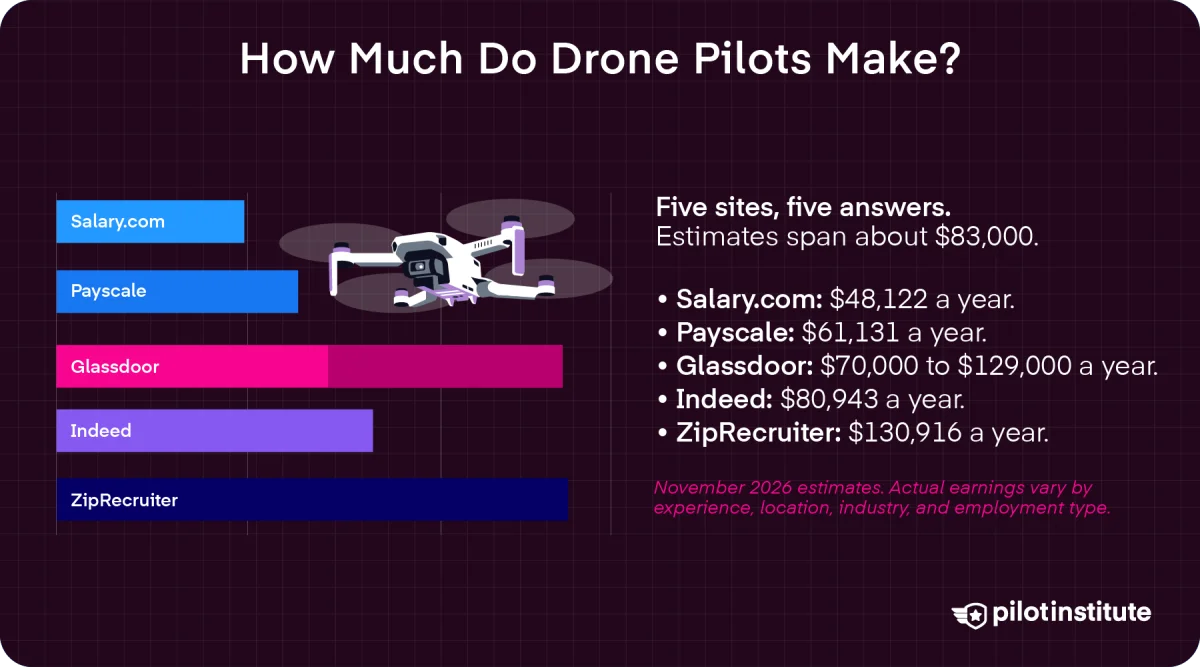
Drone pilot pay depends heavily on what the pilot does and how the salary estimate is calculated. For the U.S., figures published between September and November 2026 range from $48,122 a year at Salary.com to $130,916 at ZipRecruiter. The spread is wide enough that a single “average” can obscure the difference between an entry-level role and work involving specialized aircraft, sensors or operating skills.
For pilots weighing a career change, the useful question is less which website has the definitive number and more which work those figures represent. A salaried operator, a freelance photographer and a senior infrastructure inspection pilot face different workloads, expenses and earning potential.
What salary sites report
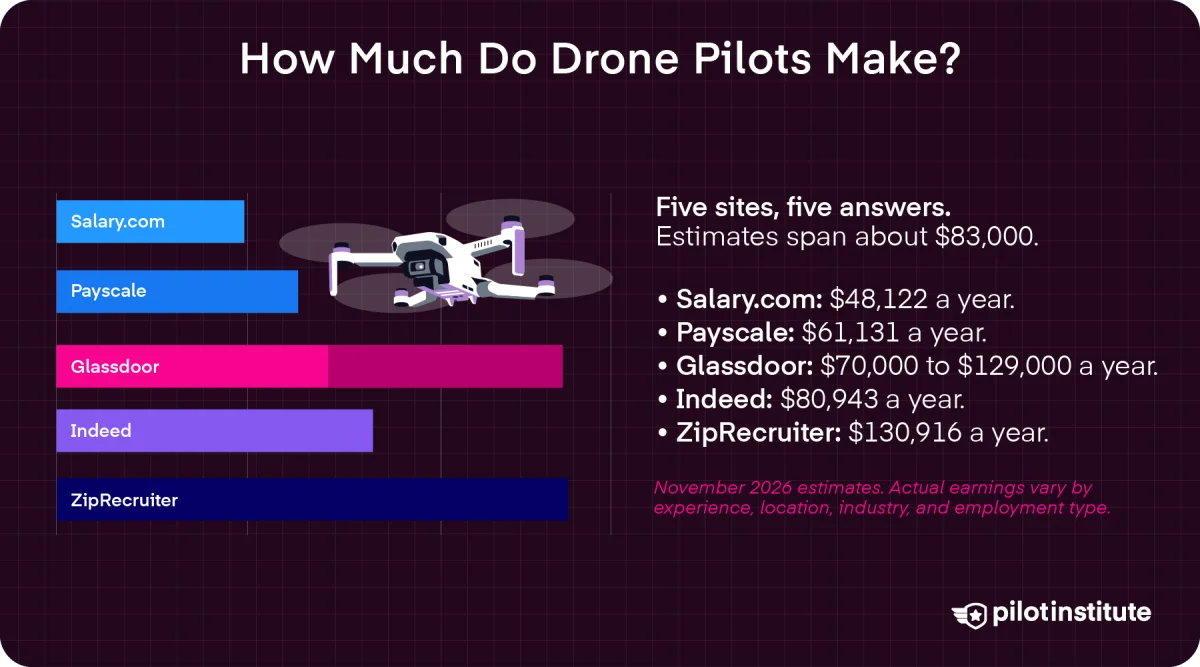
The five estimates in the source data use different methods and reporting dates. Salary.com put average annual pay at $48,122 on November 1, 2026. Payscale’s September 2 figure was $29.39 an hour, equivalent to about $61,131 a year at 40 hours a week. Indeed reported $80,943 on September 30, while Glassdoor’s October 14 estimate was $93,963, with a typical range of $70,000 to $129,000. ZipRecruiter reported $130,916 on November 5.
| Source | Average annual pay | Hourly equivalent |
|---|---|---|
| Salary.com (November 1, 2026) | $48,122 | $23.14 |
| Indeed (September 30, 2026) | $80,943 | $38.91 |
| Glassdoor (October 14, 2026) | $93,963; typical range $70,000 to $129,000 | $45.17 |
| ZipRecruiter (November 5, 2026) | $130,916 | $62.94 |
| Payscale (September 2, 2026) | $61,131 | $29.39 |
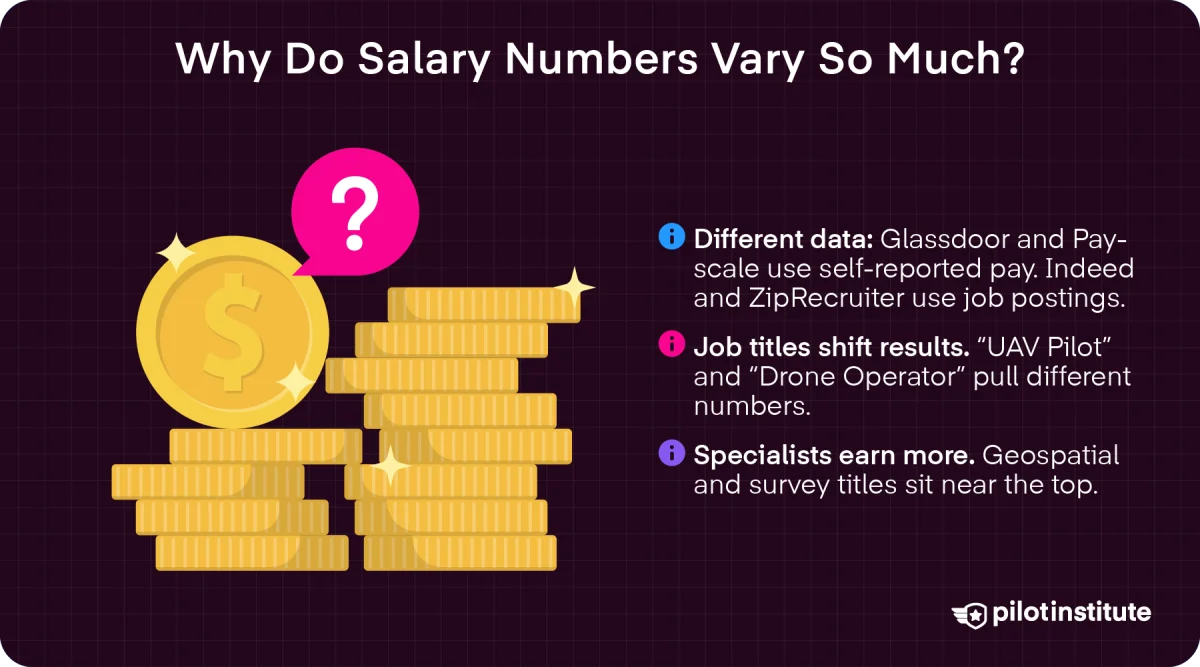
These numbers aren’t directly interchangeable. Glassdoor uses self-reported salaries, while Payscale combines self-reported pay with company-sourced compensation data. Indeed and ZipRecruiter draw estimates from job postings. Job title also matters: searching for “UAV pilot” or “drone operator” can return a different mix of work. ZipRecruiter lists the same figure on its Part 107 Pilot and Drone Pilot Military pages, which suggests those estimates may include different kinds of unmanned aircraft roles. More specialized titles, such as geospatial drone specialist, can produce higher figures.
Hourly pay and freelance rates
Using a 40-hour week across 52 weeks, the five annual salary figures average out to an hourly equivalent of $39.91, based on an average annual salary of $83,015. The individual estimates range from Payscale’s $29.39 an hour to ZipRecruiter’s $62.94.
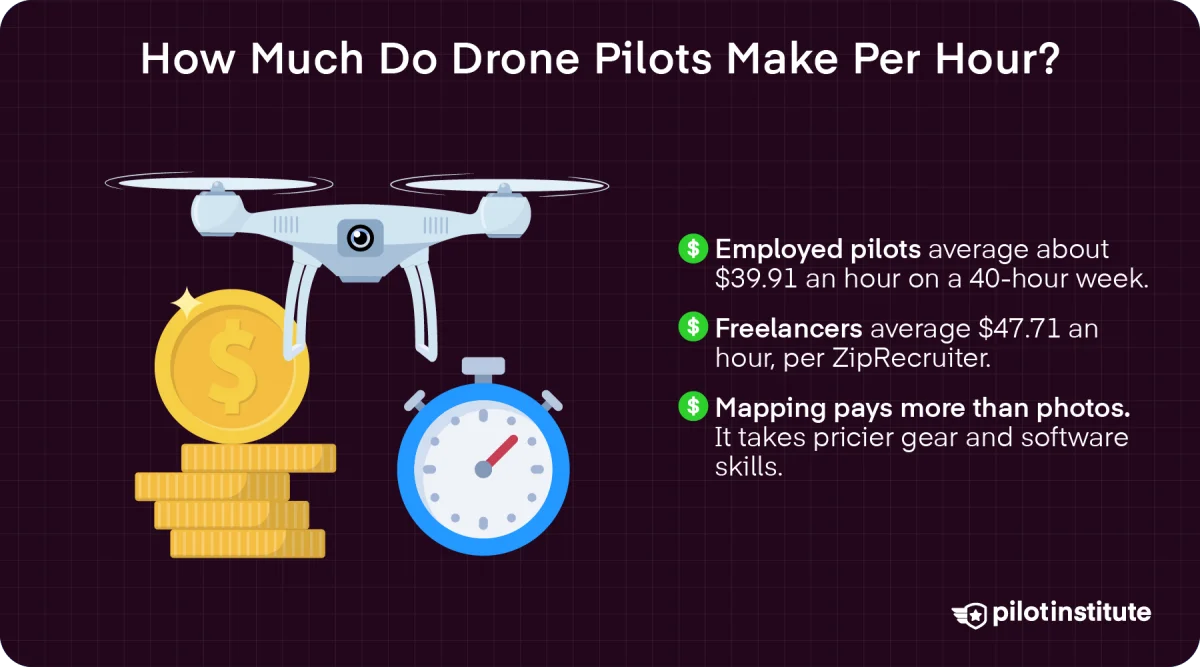
Freelance work has a different measure: ZipRecruiter listed an average rate of $47.71 an hour for freelance drone pilots in October 2026. That rate can look attractive beside the employed-pilot average, but it doesn’t account for the time spent finding clients or running a business. Freelancers pay for equipment, insurance, maintenance, software and taxes themselves, and their workload may vary.
The assignment changes the rate, too. Mapping and inspection jobs can require costly equipment, specialized software and precise data collection, while basic aerial photography may need a different setup. A higher hourly quote also doesn’t automatically mean higher take-home pay once expenses and unpaid work are included.
Specialties with higher earning potential
Research and development, cinematography and broadcasting, utility inspection, agricultural spraying and beyond visual line of sight (BVLOS) work are among the fields with higher reported pay. Each relies on a distinct set of skills, so pilots’ earnings within a specialty can still vary substantially.
Flight testing and research
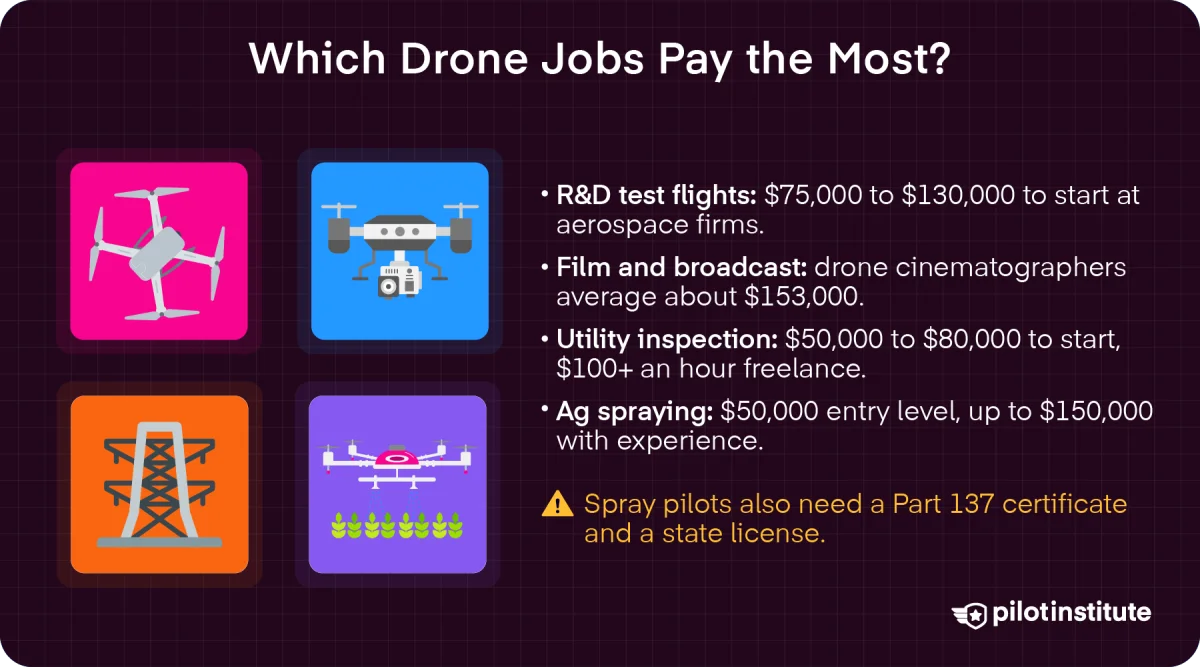
Drone test operators may evaluate new aircraft, autonomous flight systems and aircraft safety during research and development work. ZipRecruiter listings from October 2026 showed starting salaries of $75,000 to $130,000 for test operator positions at aerospace product and manufacturing companies.
Film, television and live events
Entertainment work can pay more than general aerial photography when a production needs a skilled pilot to capture moving subjects or operate in demanding settings. ZipRecruiter put average drone cinematography pay at about $152,892 a year, or $73.51 an hour, in October 2026. Sports and other event broadcasts are another specialty where the demands of professional coverage can support higher rates.
Infrastructure inspection
Entry-level utility inspection roles typically fall between $50,000 and $80,000, while experienced pilots working with utilities or oil and gas infrastructure may earn more. Inspections of power lines, wind turbines and pipelines can involve thermal analysis, LiDAR mapping or BVLOS flights. Companies that provide aerial services to utility operators also hire pilots for specific assignments; Indeed search estimates cited hourly freelance rates above $100 for some of this work.
BVLOS pilots handle missions that require advanced flight planning and risk management. The source material describes Part 108 as a proposed framework for routine BVLOS operations, rather than a rule already in effect. Its development is one area to watch for pilots building technical expertise in this field.
Agricultural spraying
Spraying drones apply fertilizers, pesticides and other agricultural products across fields, often using heavy-lift aircraft. ZipRecruiter job application listings put entry-level pay around $50,000 a year, with experienced specialists potentially earning up to $150,000. The work has additional requirements: operators need an FAA Part 137 agricultural operator certificate and a state pesticide applicator license. Drones weighing 55 pounds or more with their load also need an exemption under 49 USC §44807.
Experience, location, skills and equipment
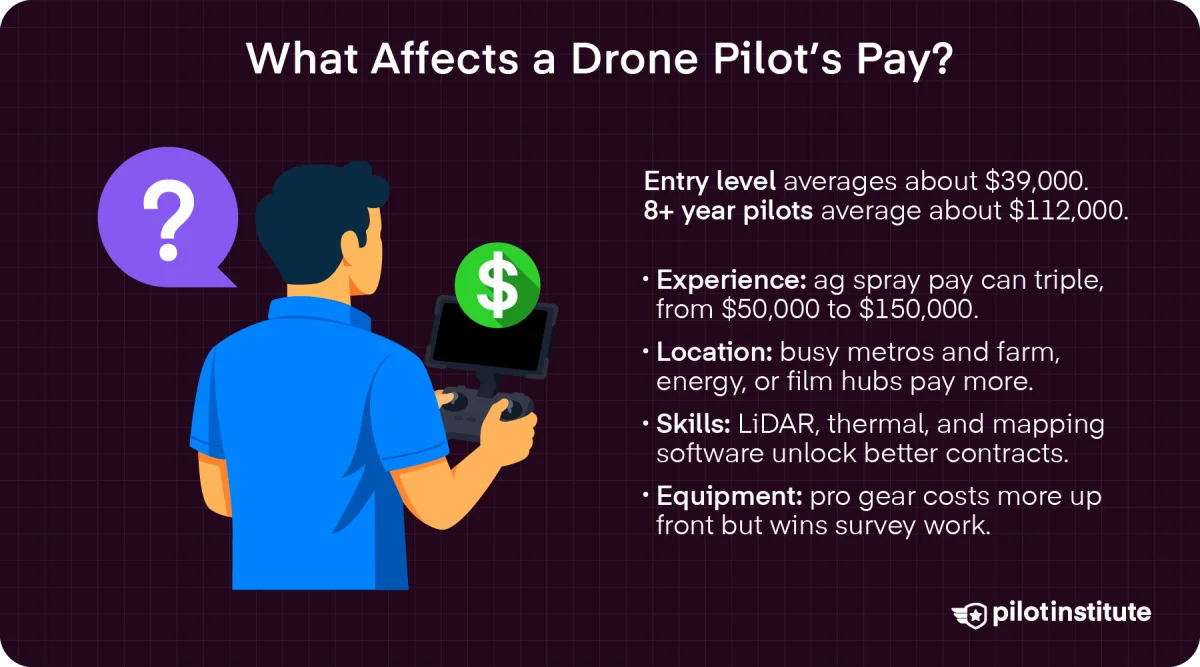
Experience is one clear divider in Salary.com’s November 2026 figures. Pilots with less than a year in the field averaged $39,067 a year; those with more than eight years averaged $111,862. More senior pilots can qualify for complex assignments, and in agricultural spraying, for example, reported pay can rise from around $50,000 for entry-level work to as much as $150,000 for experienced operators.
Location also shapes opportunities. Major metro areas and regions with active aerial service markets may offer more work. Agriculture, energy and film production are concentrated in particular places, so local demand can affect both job availability and rates.
Technical skills can help pilots compete for specialized contracts. LiDAR mapping, thermal imaging, infrastructure inspection, waiver applications and flight planning with tools such as DroneDeploy, UgCS or Pix4D can support work requiring detailed planning and accurate data. The equipment needed for those jobs can be expensive, so pilots should account for the cost of sensors and aircraft when assessing a contract’s value.
Freelance or salaried?
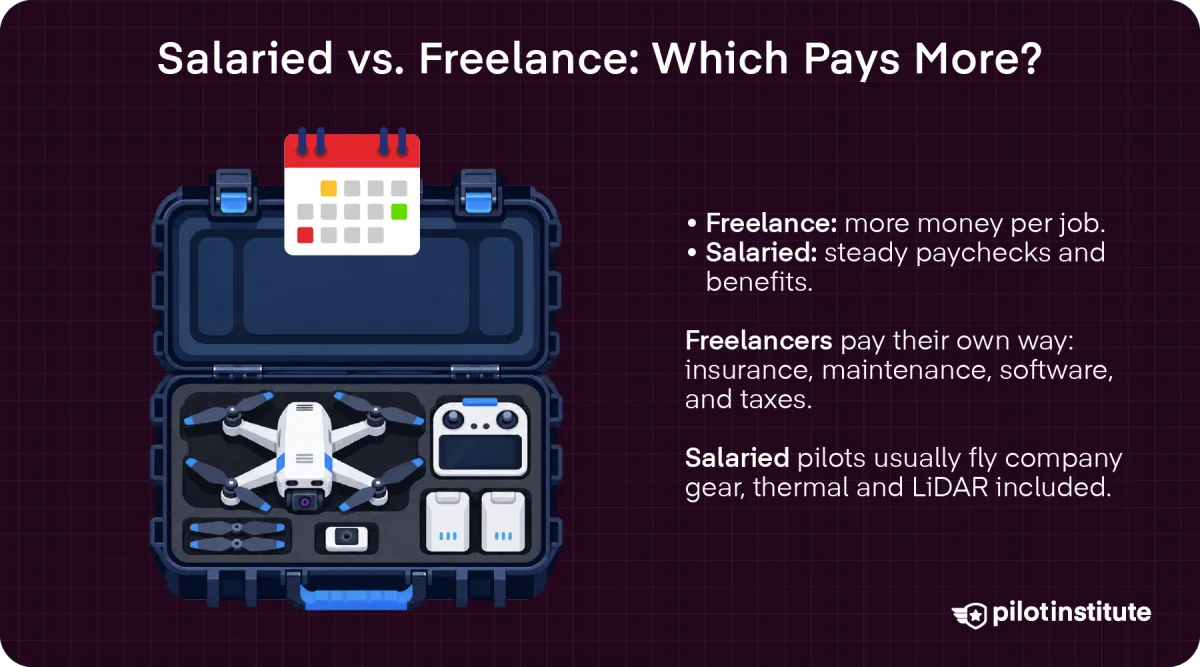
Freelancers can set their rates and choose assignments, but they carry the cost of insurance, equipment upkeep, software and self-employment taxes. Specialized payloads such as thermal cameras and LiDAR sensors add to the outlay. Finding clients and managing uneven workloads are part of the job, too.
A salaried position can bring steadier income, benefits and access to employer-provided aircraft and equipment. It may suit pilots who prefer a predictable schedule and a structured workplace. Freelancing may fit those who value flexibility and are prepared to manage the business side of flying. The better option depends on the pilot’s appetite for variable work and ability to cover operating costs.
Getting qualified to fly for pay
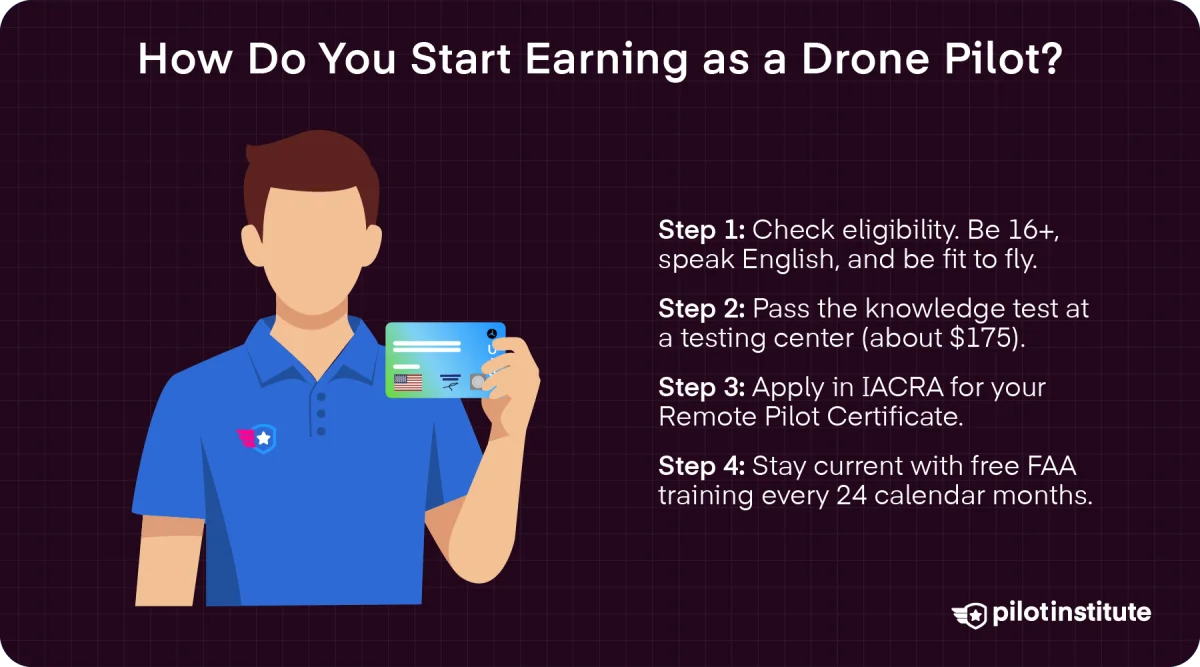
In the U.S., paid drone work requires an FAA Remote Pilot Certificate under Part 107. Applicants must be at least 16, able to read, speak, write and understand English, and not have a known physical or mental condition that would interfere with safe operations. First-time applicants must pass the FAA aeronautical knowledge test, which costs about $175 at an authorized test center. Remote pilots must also complete free FAA online recurrent training every 24 calendar months.
For pilots starting out, the certificate is a first step; building skills for a specific market is what can open access to higher-paying assignments. Real estate photography, for instance, typically brings in $150 to $350 per shoot for a standard package of edited photos and a short video, according to SkyeBrowse in March 2026. That figure, like the salary averages, is a guide rather than a guaranteed rate. Local job listings and demand for specialized services offer a more useful basis for setting expectations.