Kamaka Air Grand Caravan Crash Probe Finds Flap Rigging and Maintenance Record Gaps
| Shelf | Business & General Aviation |
|---|---|
| Date in | |
| Readers | 546 |
A Cessna 208B left flap moved out of position during take-off from Honolulu after a rod failed; investigators cite cable wear and maintenance gaps.
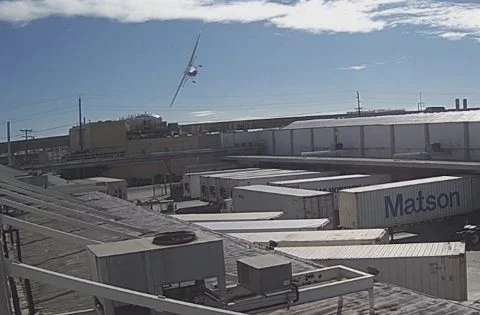
The left flap on a Kamaka Air Cessna 208B Grand Caravan moved to a low angle during take-off from Honolulu after its interconnect rod failed, investigators found. The resulting asymmetry left the aircraft’s flaps at about 5° on the left and 20° on the right as it departed for Lanai on 17 December 2024. The inquiry links the failure to evidence of cable interference and tension consistent with an improperly rigged flap system, while identifying gaps in maintenance records and concerns about training and supervision.
The aircraft had been scheduled to depart with both flaps set to 20°. Its flap actuator jackscrew was found in a position corresponding to that setting, but that did not mean both flap surfaces remained there. The investigation found worn flap cables, fractured cable strands and contact marks where the cables had rubbed against cutouts in the wing structure. The left interconnect rod, which joins the forward and aft bellcranks operating that flap, had fractured under compressive and then tensile loads.
Investigators concluded that the broken rod allowed the left flap to uncouple and move to a lower angle. The difference between the two flaps was therefore substantial by the time the aircraft lifted off runway 4L. Soon after take-off, it began a shallow left turn instead of the expected right turn for the departure pattern. It climbed to 350ft as its bank angle increased, then descended nose-down and crashed in an industrial area north of the airport. Both occupants, an instructor and a trainee, died.
Damage that pilots could not see
The inquiry found the cable wear and damage to the rod consistent with excessive preload in the flap system. Preload can arise when the system is misrigged. The damaged areas and the rod’s bent condition would not have been visible during the pilots’ pre-flight inspection, investigators said. That distinction matters: the flap position indicated by the actuator did not reveal the hidden condition that allowed the left flap to move independently.
Flap rigging checks were required during several maintenance tasks recorded for the aircraft. One was a scheduled flap-system inspection about six months before the crash. That inspection called for a functional check, an examination of the cables for fraying and interference, and verification that cable tension was within limits. The maintenance records reported no discrepancies, but contained no detail showing what the inspection covered or what checks were completed.
About 10 weeks before the crash, the aircraft underwent work after a pilot reported that the flaps would not retract. Technicians replaced the primary flap motor at night, away from Kamaka Air’s maintenance base. The records stated that the aircraft maintenance manual had been followed. However, the manual did not provide a procedure for replacing only the motor: its relevant instructions covered removal and installation of the complete actuator assembly, a task that requires correct flap-system rigging.
The motor replacement took about one hour. Given the duration and circumstances, the inquiry said it was unlikely that all the system functional checks had been performed. Investigators could not establish whether the cable tension problem that preceded the rod failure began during that motor replacement or had already been present. The evidence points to a maintenance-control concern, but does not identify a single servicing event as the confirmed origin of the misrigging.
Fleet records and follow-up checks
A review of Kamaka Air’s Cessna 208 maintenance records from 2013 through 2024 found multiple instances of primary flap motor replacements. In other cases, the complete flap actuator assembly had been replaced. For both kinds of work, the records did not describe the tasks performed or state whether technicians completed flap-system functional checks and rigging tests. That left investigators unable to confirm from the paperwork whether the required checks followed individual maintenance jobs.
From February through May 2025, the operator checked cable tension on its six remaining Cessna 208 aircraft. Four had tension outside the specified limits. Technicians interviewed during the inquiry said they followed the aircraft maintenance manual, but the repeated motor-only replacements, sparse work descriptions and out-of-tolerance findings across several aircraft formed a broader pattern. Investigators described that pattern as indicative of deficiencies in training and supervision.
The US Federal Aviation Administration had identified shortcomings in Kamaka Air’s maintenance record-keeping roughly two or three months before the crash and was working with the operator to address them. Further work to identify hazards and reduce risks was also under way; some of it had been completed by June 2025. The inquiry did not establish whether those earlier record-keeping concerns directly involved the flap work on the accident aircraft.
For operators, the findings underline why a component replacement can carry system-wide checks even when the part itself is small. On this aircraft, changing the flap motor sat within a system whose safe operation depended on cable routing, tension and the relationship between linked bellcranks. Detailed records are essential to show that those checks were completed and to help trace recurring defects across a fleet. In this case, investigators could identify the mechanical failure and the maintenance weaknesses, but could not determine when the improper cable tension first arose.