Thai Condominiums Tighten Rules on Short-Term Airbnb and OTA Stays
| Shelf | Business & General Aviation |
|---|---|
| Date in | |
| Readers | 313 |
Thai condo buildings are enforcing restrictions on short stays, creating a risk of eviction for guests and fines for owners.
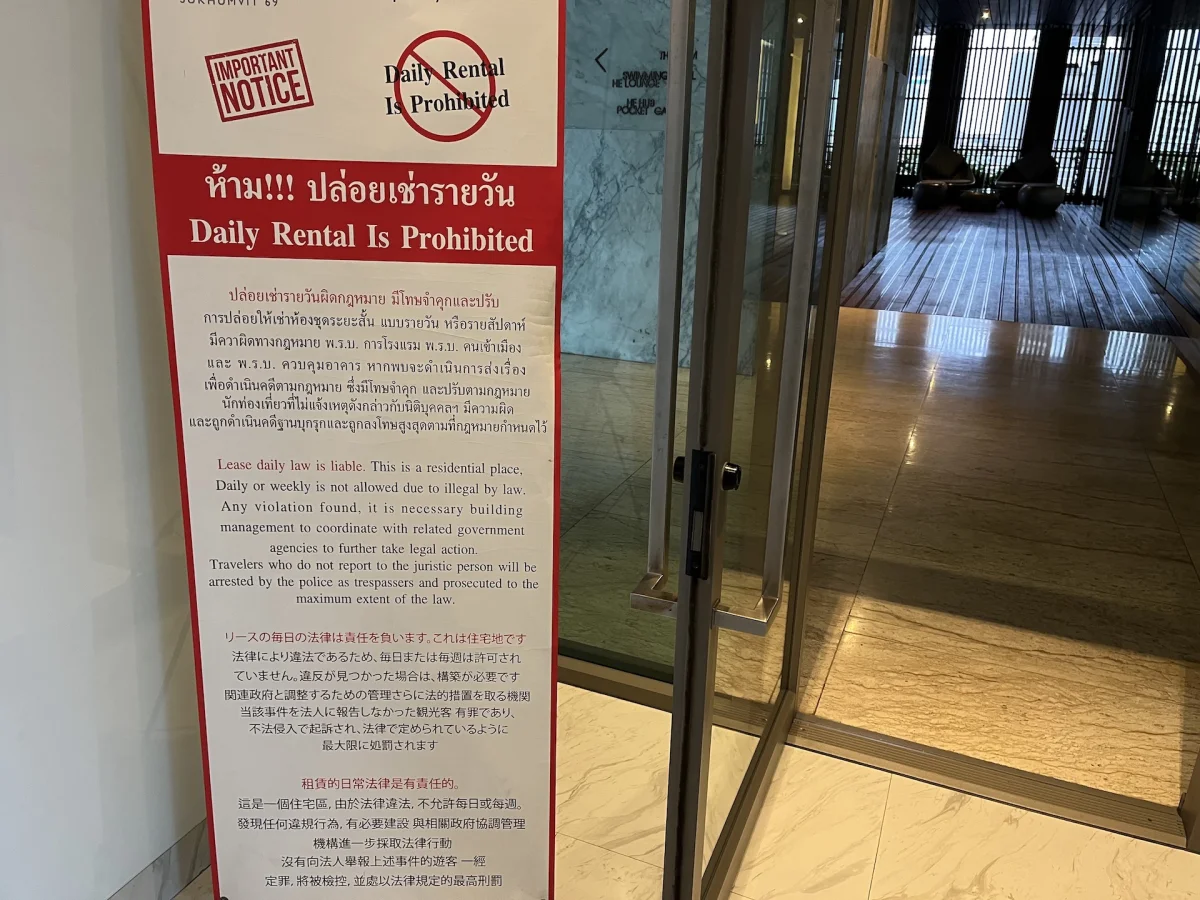
Short-term condo bookings in Thailand can end with guests being told to leave, as some buildings step up enforcement of rules against temporary stays. The change affects travelers who book private apartments through Airbnb and other online travel agencies, as well as owners who rent them out: a confirmed reservation may not mean the building will accept the stay.
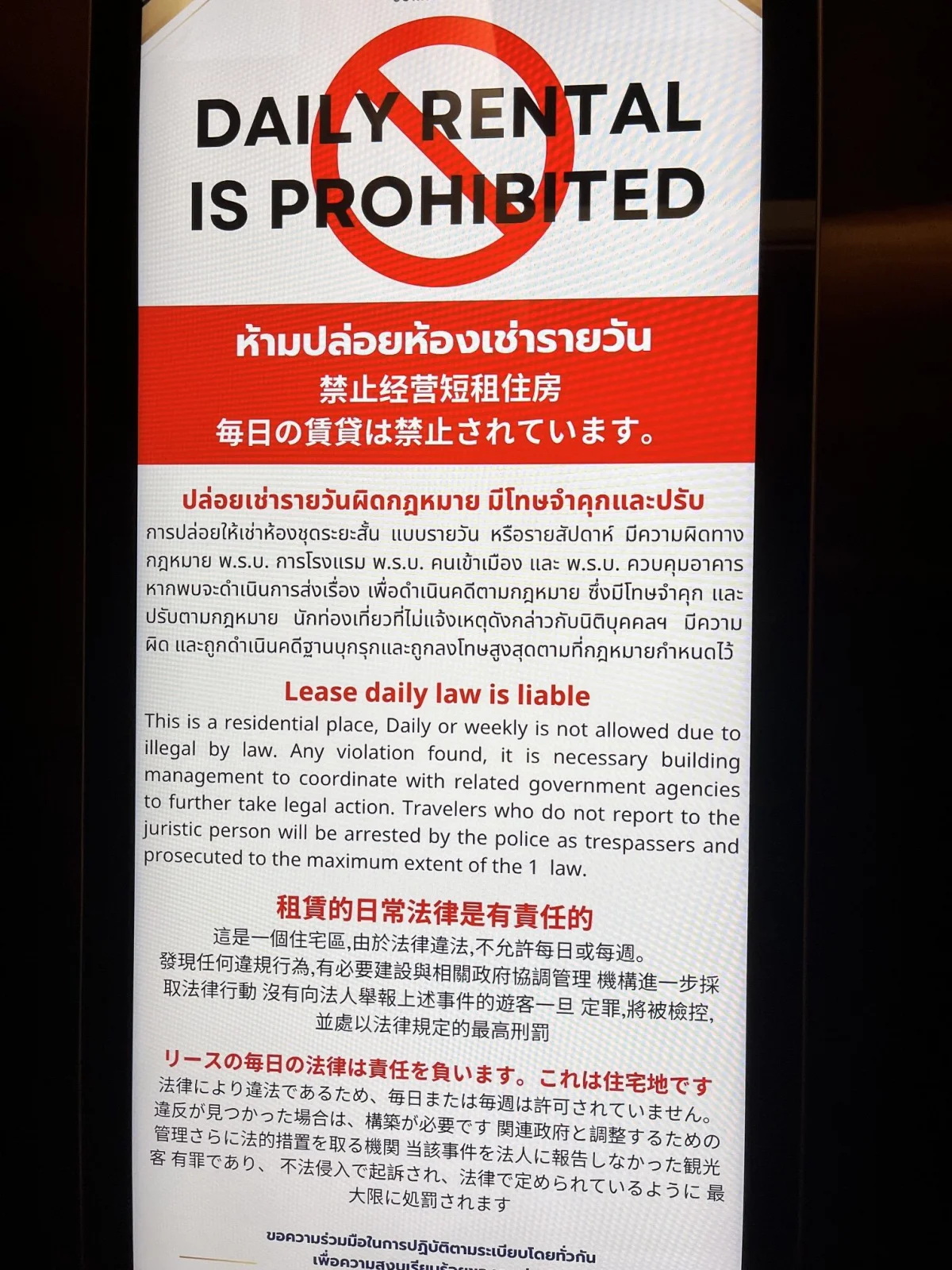
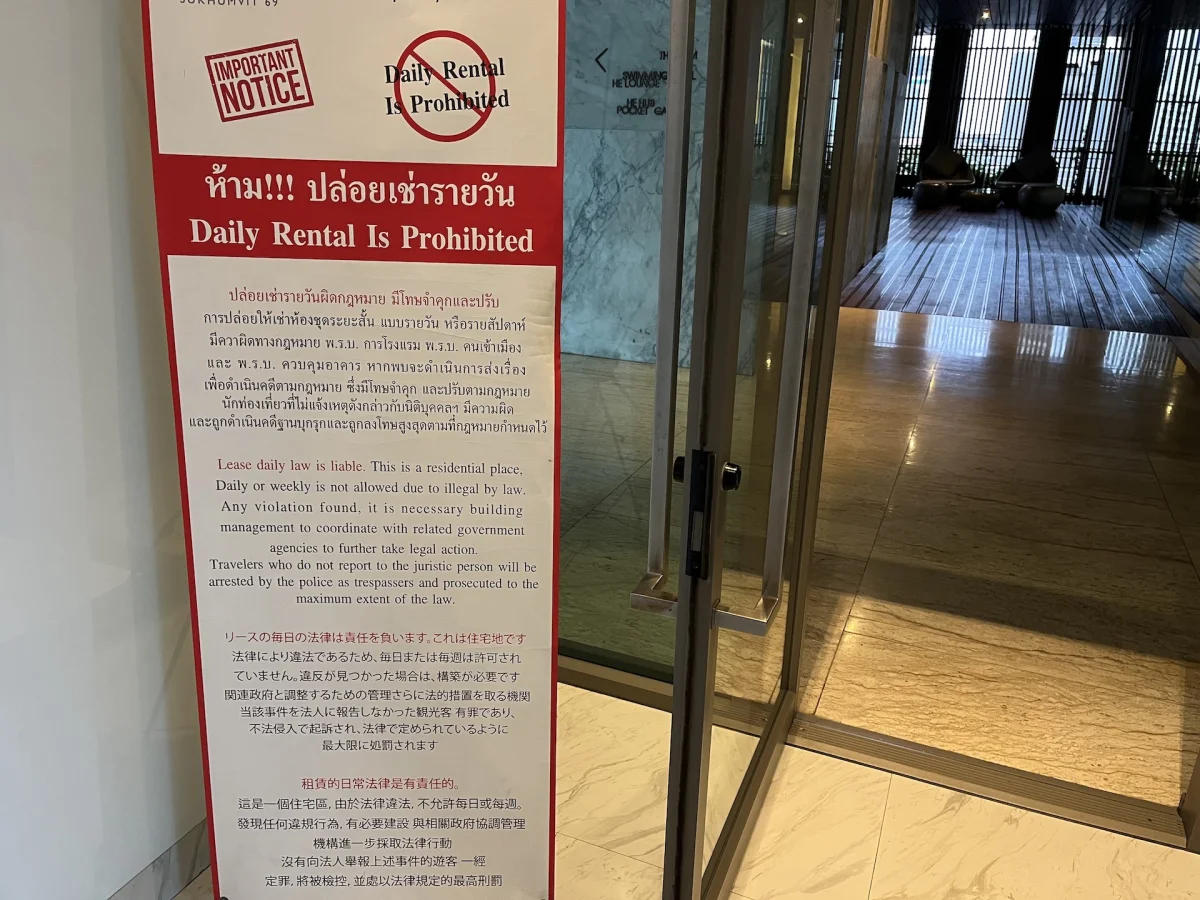
Recent enforcement at one condominium included several evictions after an owners’ meeting, with one incident prompting a call for police assistance when a confrontation developed. The building has posted notices in its lobby, by the pool entrance and inside elevators. That visibility makes the rules hard for incoming guests to miss, but travelers may only encounter them after booking or arriving with their luggage.
A booking can conflict with building rules
Owners can advertise private units online, but a listing does not establish that short-term guests are permitted in the building. Restrictions may come from local requirements as well as condominium rules. When residents complain about temporary occupants, building management may intervene; the guest can be required to leave, and the owner may face a fine.
The distinction between a private residence and a hotel matters in daily use, too. Residents expect quiet, privacy, security and shared spaces to be respected. Guests who treat an apartment like a staffed hotel may create friction, particularly if they make noise or leave common areas untidy. In some cases, the arrival of unfamiliar guests carrying suitcases can itself draw attention from residents or building staff.
Airbnb’s hosting guidance says hosts should check whether their property can be rented and points to restrictions that may arise from laws, contracts and community rules. It also describes a limited exemption from a hotel licence for properties with no more than four rooms and a capacity of no more than 20 guests, when the rental provides additional income to the owner. The guidance says hosts using that exemption still need to report their activity to the relevant local office. Those conditions do not, by themselves, show that a particular condo permits short stays.
Platform choice doesn’t settle the question
Airbnb is not the only route to a short-term apartment booking. Private homes are also listed through platforms such as Booking.com and Agoda. For the traveler, the practical issue is the property and building’s rules, not which booking site processed the reservation. A listing can be available online while a condominium is actively turning away short-stay occupants.
That gap leaves guests exposed to disruption. If building management requires them to leave, they may need to find another place to stay at short notice and then seek a refund through the booking platform. A host’s assurance may not be enough to prevent that outcome, especially when the building has its own restrictions and enforcement practices.
Before booking, travelers can ask the host directly whether stays of their intended length are allowed by the condominium and whether the building has any guest registration requirements. It is also sensible to get the answer in writing and check the listing’s cancellation terms. These steps cannot guarantee that a dispute will not occur, but they can make the arrangement clearer before arrival.
Longer stays have a different status
Stays of a month or more are described as permitted in the building context outlined here. Even then, owners are expected to register residents with both the condominium management office and immigration. Guests considering an extended booking should confirm the exact duration and any registration steps with the host before paying.
The pressure on short-term rentals reflects a basic mismatch: booking platforms make private units easy to find, while condominium buildings operate as shared homes with their own expectations for residents and visitors. When a building tightens enforcement, the effects reach beyond the owner. Guests can lose accommodation mid-stay, neighbors may see fewer unfamiliar arrivals, and management takes on the task of applying the rules at the property.
For travelers, the useful takeaway is to verify that a short stay is accepted by the specific building, not simply offered by a host or displayed on a booking site. For owners, the recent evictions show that online demand does not remove the need to check building requirements before accepting guests. In Thailand’s more upscale condominiums, the notices and enforcement described here suggest that this check is becoming a practical part of booking planning.