How GSSAs avoid a race to the bottom
| Shelf | Airlines & Routes |
|---|---|
| Date in | |
| Readers | 795 |
GSSAs are avoiding a race to the bottom in localised rate wars by utilising data, creating premium products and feeding in cargo from more lucrative locations. Speaking at the Aviation Connect event t...
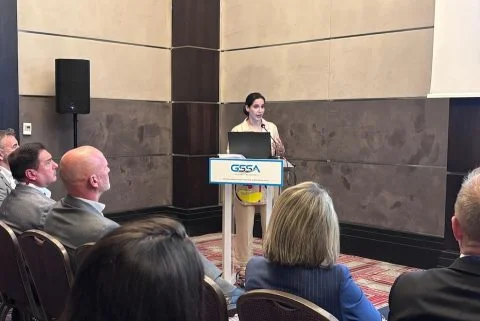
GSSAs are avoiding a race to the bottom in localised rate wars by utilising data, creating premium products and feeding in cargo from more lucrative locations.
Speaking at the Aviation Connect event taking place in Athens this week, Kritika Seth, executive director of GSA Allied Aviation, outlined how it avoids getting dragged into rate wars in local markets.
She said if a rate war takes place, the company evaluates its relationship with the forwarders in the local market – for instance, whether there is a long-term commitment – to make a decision on whether to continue business and, if it decides the rates are too low and there is no wider benefit, it can then utilise its broad network across India to feed in cargo from other stations rather than carry lower-margin volumes.
Allied Aviation also has strong local market knowledge and tries to understand what the airline customer actually needs in terms of the business it carries.
“India is a very fragmented market in terms of commodity so feeding cargo from other gateway stations really adds value to the overall revenue and productivity,” she said.
“So if there is a rate war happening in one gateway, I will look at another station to feed in cargo and optimise the revenue and balance out the entire flight revenue.”
Seth added that the company maintains strong price discipline and would not reprice a lane to win one shipment.
“It is all about what kind of product I am trying to create for the airline I am working with,” she added. “So if this is an airline that I am trying to position as a premium product, we then do not enter any rate wars.”
Speaking in a later session, Wexco Cargo GSSA managing director Des Vertannes said that the company utilises data interrogation to maximise profitability by combining products and verticals.
“You have to look across the spectrum to see where you can see those opportunities and then maximise those opportunities, and that is where the data comes in.”
He added: “There is a lot of research that goes into that and then we feedback to the airlines and realign.”
During a presentation, Vertannes also highlighted the importance of quickly responding to requests for quotes and said GSSAs should sell outcomes, not capacity.
This entailed knowing commodities, lanes, seasonality and risk; anticipating needs before they become urgent; and offering advice on routing and service options.
There is also a need to align the service promise from sales with the delivery of that service by operations.